
Fancy Home
Automation
Smart home automation connects your lights, climate, security, and appliances so they work together — controlled by voice, app, or rules you define. The goal is a home that responds to how you live, not the other way around.
Discuss automation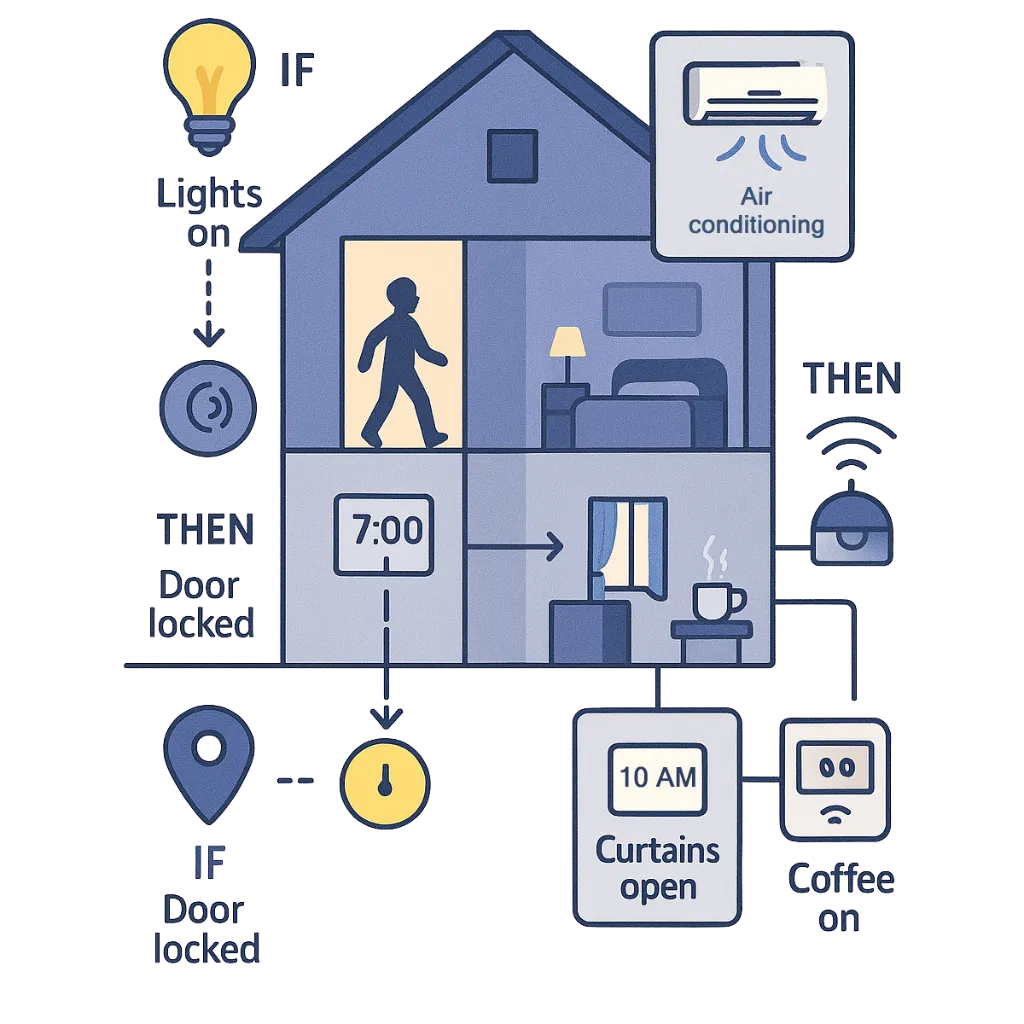
Key components
A reliable smart home starts with the right building blocks — devices, connectivity, and a control layer that ties everything together.
Smart devices
Lights, thermostats, locks, cameras, and appliances that can be monitored and controlled remotely.
Hubs and controllers
Central systems that manage communication between devices using Wi-Fi, Zigbee, Z-Wave, or other protocols.
Sensors and actuators
Motion, temperature, and contact sensors provide input; motors and switches carry out the physical actions.
Apps and voice assistants
Mobile apps and platforms like Alexa, Google Assistant, and Siri give you intuitive control from anywhere.
Voice control
Hands-free control makes daily routines simpler — especially when your hands are full or mobility is limited.
Natural commands
Turn lights on, adjust temperature, or run scenes with a single spoken phrase.
Centralised control
One assistant can manage devices from multiple brands, reducing the need for separate apps.
Routines and scenes
A phrase like "good morning" can trigger lights, blinds, and your coffee machine in sequence.
App control
Smartphone apps give you full visibility and control over your home from anywhere with an internet connection.
Remote access
Check device status, adjust settings, and receive alerts while you are away.
Custom schedules
Automate lights, climate, and appliances based on time, occupancy, or other triggers.
Real-time feedback
Monitor energy use, security events, and device health from a single dashboard.
Robots and physical automation
Robotic devices extend automation beyond switches and screens into physical tasks around the home.
Cleaning and maintenance
Robot vacuums, mops, and lawn tools reduce routine chores and can integrate with occupancy sensors.
Monitoring
Mobile robots with cameras can patrol areas and send alerts when something looks out of place.
Integration
Robots can coordinate with other smart devices — for example, cleaning when a room is unoccupied.
Security and efficiency rules
Automation rules turn your home into an active participant — responding to threats, occupancy, and energy conditions.
Security responses
Motion at night can trigger lights and cameras; doors left open can send an alert to your phone.
Energy management
Thermostats, blinds, and appliances adjust automatically based on occupancy, weather, or time of day.
Custom logic
Rules are tailored to your household — balancing security, convenience, and efficiency.
Everyday convenience
The best automation fades into the background — handling routine tasks so you can focus on what matters.
Automated routines
Lights, climate, and entertainment adjust without you reaching for a switch or remote.
Contextual awareness
Rain detected? Close blinds and adjust indoor lighting. Leaving home? Arm security and lower heating.
Accessibility
Voice and app control make the home easier to manage for everyone, including those with mobility needs.
Start your automation project
We assess your home, recommend practical options, and install systems that work reliably day to day.
Contact us